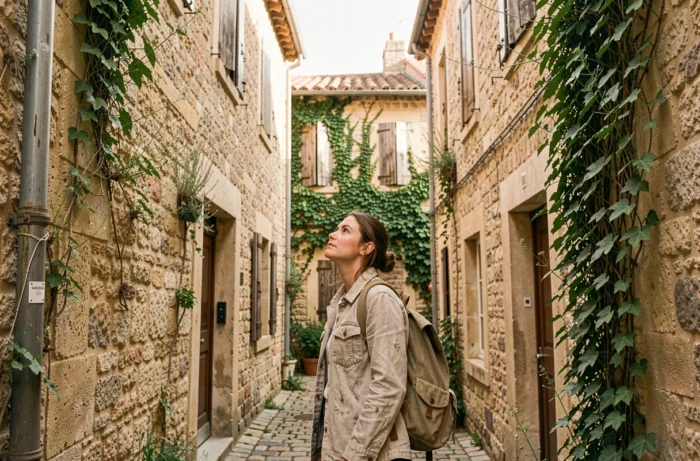
Lists of unusual places in France all look the same: Gorges du Verdon, Palais du facteur Cheval, Gouffre de Padirac. The problem is not the selection, but the lack of a method to find sites that truly stand out from the marked circuits. Discovering unusual and inspiring places in France today requires navigating access constraints, regulated capacities, and crowd forecasting tools that change the way outings are planned.
Regulated access to natural sites in France: what has changed
The free and spontaneous access to certain French natural sites is increasingly a thing of the past. In Sugiton, in the Calanques, access is subject to reservation during high season. On the Tour du Mont-Blanc, local stakeholders are preparing for 2027 a mandatory reservation for overnight stays on the French side, with a ban on wild camping outside authorized areas.
This measure specifically targets hikers on multi-day treks, not anyone passing through a section. This distinction is rarely specified in mainstream guides, and it radically changes the planning of a trek.
The tourist pressure on these sites generates a tense local arbitration. Some elected officials advocate for stricter rules in light of the effects of visitor numbers on trails and facilities. Others emphasize the importance of economic benefits. Exploring unusual places in France now requires checking the regulatory framework before departure, not just the weather.
We have identified several sites where reservations or capacity limits condition the experience. To spot these atypical destinations and track the evolution of their access conditions, platforms like quelque-part.net centralize useful information about places that fall outside the usual circuits.
Crowd forecasting tools: preparing your visit differently
Since the summer of 2026, the Parc du Marquenterre displays hourly crowd forecasts, up to fifteen days in advance. The goal: to allow the public to adjust their visit or choose another location when the expected attendance is too high.
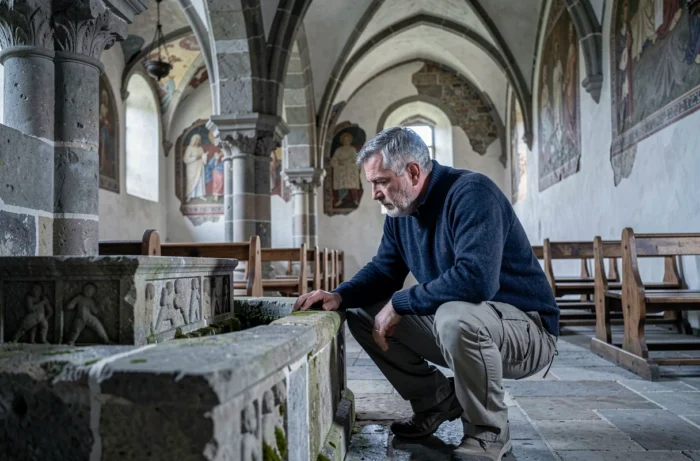
This type of system transforms the discovery of an unusual site into an informed decision. Consulting a crowd indicator before heading to a natural or heritage site is no longer just a reflex of an organized tourist; it is a preparation step on par with checking the walkability of a trail.
Digital tools also help guide visitors in advance. Rather than waiting in line in front of a castle or cave, the informed visitor cross-references several sources:
- The crowd forecasts published by parks and heritage sites, when they exist (still rare outside of a few pioneers)
- IGN maps via the mobile app, which allow users to identify trails and sites not listed on mainstream tourist platforms
- Mandatory reservation calendars, especially for the Calanques and regulated mountain routes
The issue is not to flee the crowd by principle. It is to arrive at an unusual place under conditions that preserve what makes it unique.
Preservation labels and sustainable tourism: spotting committed destinations
A preservation label can become a discovery pathway in its own right. Sites committed to sustainable tourism are often less publicized than viral spots but offer a more authentic experience.
The label does not guarantee the absence of visitors, but it indicates a visiting framework designed to limit impact. From regional natural parks to biosphere reserves, these territories structure visitor reception around the site’s carrying capacity.
For a traveler seeking inspiring places in France, cross-referencing the map of labeled spaces with crowd indicators constitutes a more reliable method than following a fixed list of destinations. The classified village that attracted a few curious visitors five years ago may be saturated today. The labeled site that regulates its flows offers a better probability of genuine discovery.
Criteria for evaluating an unusual place before the visit
The notion of unusual wears off quickly. A site loses its unique character as soon as it welcomes flows incompatible with its configuration. Before traveling, a few criteria deserve to be checked:
- Existence of a capacity limit or reservation system, indicating that the manager is protecting the visitor experience
- Presence of an environmental or heritage label, indicating a commitment beyond simple tourist marketing
- Accessibility off-season, often the best indicator of a place worth visiting for itself and not just for its summer buzz
- Available cartographic documentation (IGN maps, topoguides), a guarantee of a site that is genuinely walkable and not just an Instagram backdrop without marked trails
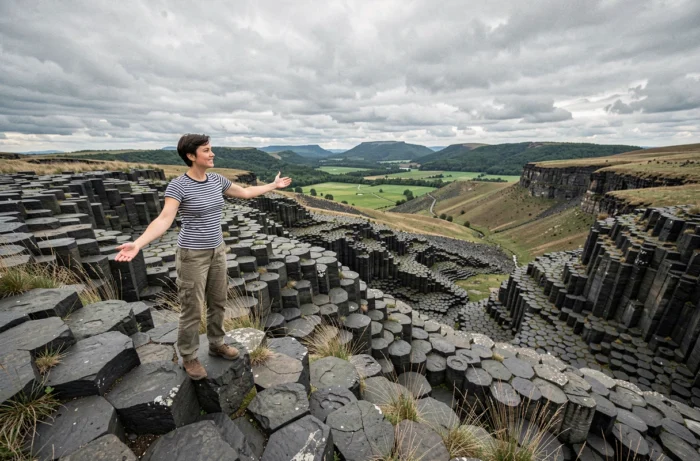
Guédelon, facteur Cheval, Carnac: beyond the conventional rankings
The château de Guédelon in Yonne, the Palais idéal du facteur Cheval in Drôme, the Alignements de Carnac in Brittany: these sites appear in every guide to unusual places in France. Their notoriety does not diminish their interest, but it changes the conditions of the visit.
Guédelon remains a living medieval construction site, where techniques and materials predating the 13th century are used exclusively. The Palais du facteur Cheval, built by a single man over decades, retains a visual power that photographs cannot capture.
The trap would be to visit them as one checks off a list. These sites are best discovered in the low season, with enough time to observe the details that the crowd conceals. A construction site does not look the same in July as it does in November.
Searching for unusual places in France is not limited to accumulating GPS coordinates. The most productive approach is to cross-reference crowd data, regulatory frameworks, and preservation labels to identify sites where the experience lives up to the promise. A truly inspiring place is one where the visiting conditions still allow for surprise.