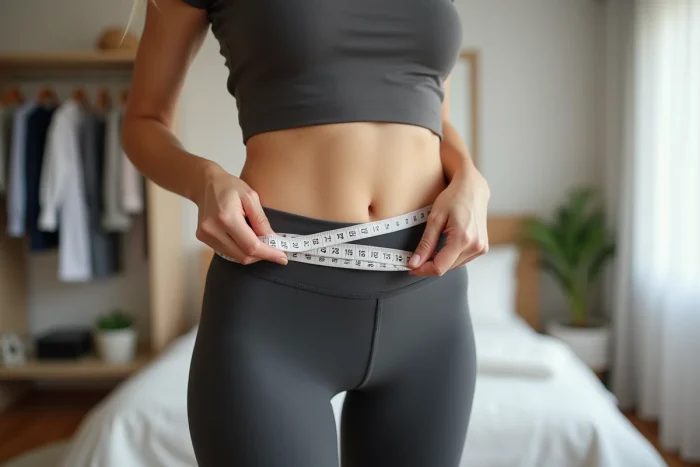
The numbers don’t lie, especially when it comes to health. Long before a diagnosis is made, certain bodily indicators provide silent warning signals. A waist-to-hip ratio that exceeds 0.85 for women or 0.90 for men, as highlighted by the World Health Organization, indicates an increased risk of cardiovascular complications. The danger often creeps in quietly, while the data remains relentless.
The waist-to-hip ratio: why this number matters for your health
At first glance, this ratio seems to be just another number among many, stuck in the long list of medical recommendations. However, considering this ratio as a secondary detail would mean overlooking its real impact. By dividing the circumference of the waist by that of the hips, we reveal how fat accumulates, and more importantly, what underlying risks are hidden behind appearances.
The female silhouette is read through the arrangement of several elements: shoulder width, waist curvature, hip breadth, and breast volume. For generations, these differences have given rise to several morphological profiles:
- X (hourglass)
- 8
- A (pear)
- V (inverted triangle)
- H (rectangle)
- O (oval)
- Spoon
- Diamond
Each one has its own structure. The shoulders, bust, waist, and hips outline the unique shape of each body, and for health, these markers are what truly matter before any aesthetic considerations.
If the question of the ideal hip measurement arises so often, it’s not by chance. The topic sparks comparisons and inquiries, but it would be illusory to fit all morphologies into the same mold. The priority, according to doctors, remains the search for a waist-to-hip balance, to avoid excess abdominal fat, which is far more concerning for the heart than bone width. It’s up to each individual to find their balance, far from general prescriptions.
Ultimately, optimizing health does not mean sacrificing aesthetics at the altar of numbers. Choosing to know your own measurements is to move forward with confidence, equipped with reliable indicators to guide your efforts and make sustainable progress.
How to determine your measurements and calculate your waist-to-hip ratio
To measure your waist and hips reliably, a flexible measuring tape is sufficient, provided you follow a few precise steps: standing with your feet together, place the tape at the narrowest point of your bust for the waist, then at the widest part of your hips for the hips. These two measurements will serve as the basis for calculating the ratio.
Then, take a look in the mirror. Compare your shoulders, waist, and hips. It is by confronting measurement and observation that you refine your self-perception: hourglass, pear, inverted triangle, rectangle… Each morphology has its markers, clearly visible when you cross the tape result with the reflected image.
The calculation is as simple as can be: just divide the waist measurement by the hip measurement. The result indicates how your body distributes its fat reserves and allows you to adjust your strategy according to your desires, health, silhouette, or daily comfort.
Remember these steps for effective and comparable measurements:
- Waist measurement: taken at the narrowest point
- Hip measurement: taken at the widest point
- Waist-to-hip ratio: waist measurement divided by hip measurement
To go further, multiply the angles: observe yourself dressed, test different clothes, try an online morphology test. Any additional input refines the diagnosis, but taking your own measurements remains the cornerstone for anyone wanting to understand and adapt their silhouette with awareness.
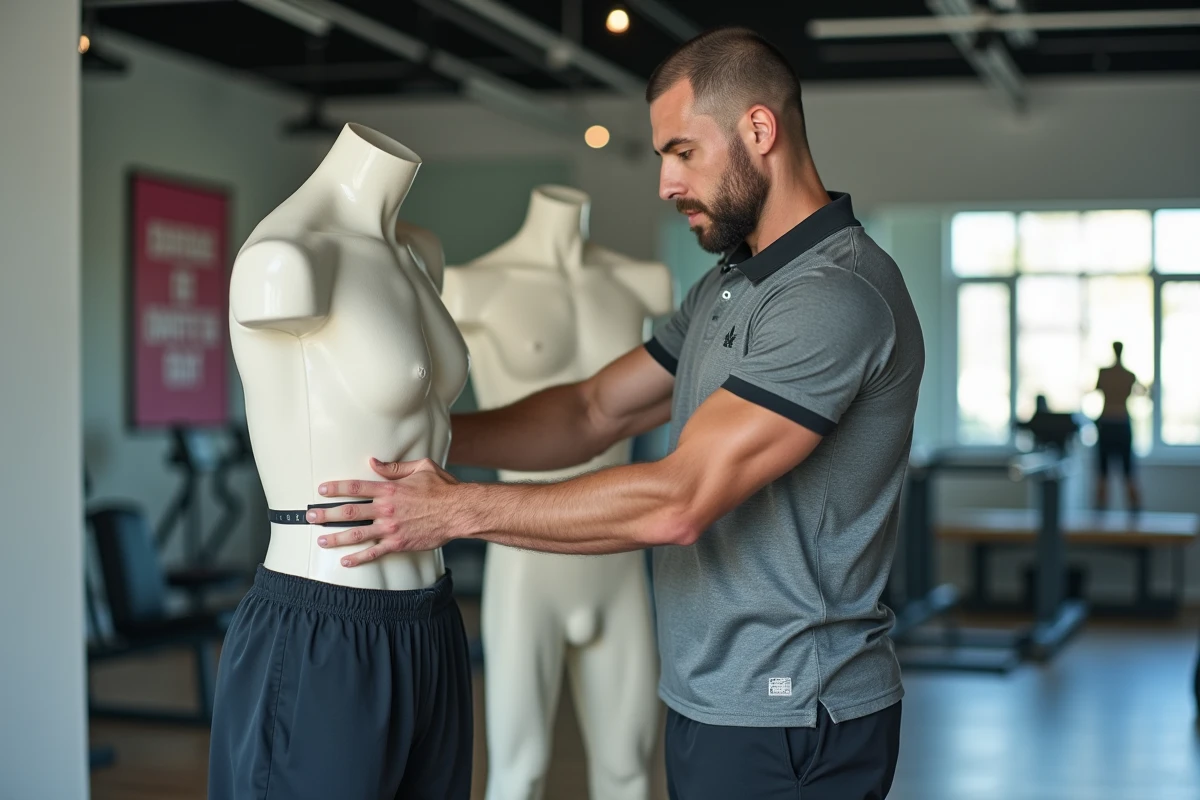
What is the ideal hip measurement according to your morphology and personal goals?
Defining an ideal hip measurement would be to misunderstand the diversity of silhouettes. It all depends on the starting morphology and, above all, what each person seeks to highlight. Female morphologies cannot be reduced to a universal rule: X, 8, A, V, H, O, spoon, diamond… Each imposes its own balances and volumes.
On one side, the X profile (or hourglass) harmonizes shoulders and hips around a slim waist. Here, the priority is to preserve the look defined by natural symmetry. The 8 shape, equally balanced but more curvaceous, emphasizes the defined waist and generous curves.
For women of type A, the hips clearly exceed the shoulders: the goal is to choose looks that complement this contrast or structure the upper body. Conversely, the V silhouette focuses on balance by enhancing the lower part to soften shoulder width.
No silhouette should align with a mythologized value. It is the search for comfort, the desire for affirmation, or simply confidence in one’s shape that truly guides the choice of the “right” hip measurement. Knowing which morphology you belong to is primarily a springboard to find flattering cuts, choose suitable clothing, and embrace the evolution of your body without getting trapped in comparison. In the end, it is not the measurement written on paper that makes the difference, but the assurance born from true self-knowledge. That is what paves the way to an embraced silhouette, truly reflective of oneself.