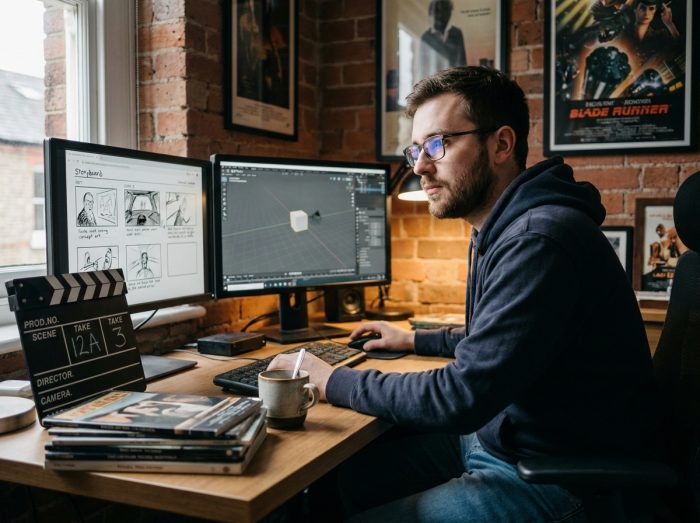
Special effects in cinema did not originate with computers. They appeared as early as the first screenings, when technicians crafted optical tricks to create illusions on film. Today, the sector attracts profiles from cinema out of passion, not initial technical training. This permeability between cinematic passion and VFX professions is reshaping career paths in the audiovisual industry.
Technical skills required to work in VFX today
Loving cinema is not enough to land a position in a special effects studio. Recruiters seek profiles capable of mastering compositing software, 3D modeling, or particle simulation. Knowledge of cinematic language (framing, lighting, continuity) remains an asset, but it must be accompanied by a solid technical foundation.
Traditional film schools are gradually integrating modules dedicated to visual effects into their curricula. This evolution reflects a market reality: studios are looking for hybrid cinema and VFX profiles, capable of understanding both visual storytelling and the constraints of digital production.
Exploring the passion for cinema and special effects allows one to gauge how these two worlds mutually nourish each other, from the script to post-production.
Among the most sought-after skills are:
- Mastery of compositing (combining layers of images to create a coherent final shot), which remains the most common entry-level position in VFX studios
- 3D modeling and texturing, where the artistic sensitivity inherited from cinema makes a real difference in the rendering of materials and sets
- Understanding the production pipeline, meaning the technical chain that links shooting to the final delivery of the altered shot
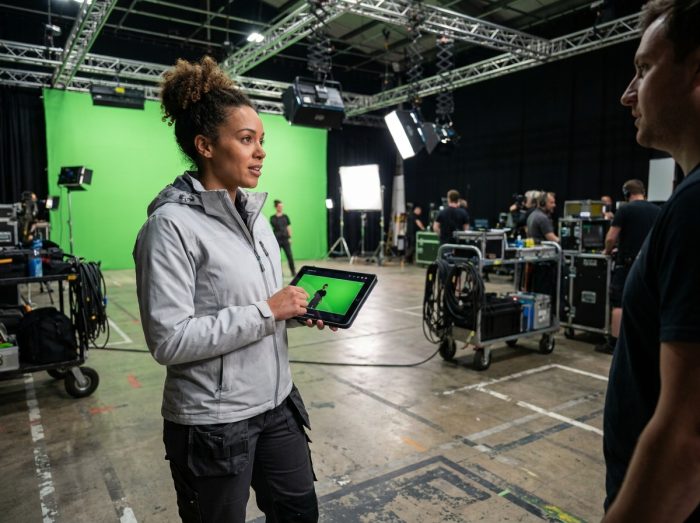
VFX studios integrated into production companies: a recent shift
For a long time, special effects were outsourced to specialized providers. The production studio would entrust its complex shots to a third-party company, often after filming. This model worked for decades, but it shows its limits on productions with tight schedules.
In recent years, several production companies have created their own internal VFX departments. This choice responds to a need for control over deadlines and artistic direction. The “in-house VFX” model is changing recruitment: studios are no longer just looking for technicians, but collaborators who understand the film as a whole.
For a cinema enthusiast, this evolution opens a direct door. Working within a production allows participation in creative choices from the storyboard, not just at the end of the chain. However, field feedback diverges on this point: some professionals believe that internalization reduces the diversity of technical approaches compared to specialized outsourcing.
Practical and digital special effects: two fields, two career logics
The term “special effects” encompasses two distinct realities. Practical special effects (prosthetic makeup, pyrotechnics, animatronics) are created on set during filming. Digital visual effects (VFX) come into play in post-production, on screen.
Georges Méliès was already using mechanical tricks and superimpositions at the end of the 19th century. This tradition of “handmade” has not disappeared. Recent productions continue to employ models, constructed sets, and pyrotechnic effects, often combined with digital elements in post-production.
Choosing between practical effects and VFX shapes the entire professional trajectory. The former require artisanal skills (sculpting, molding, material chemistry). The latter demand advanced computer training. A passion for cinema is the common denominator, but technical paths diverge quickly after the first few years.
The case of hybrid productions
Films that blend practical effects and digital touch-ups represent a growing share of production. A prosthetic makeup shot on set will often be reworked in compositing to adjust lighting continuity or erase visible seams.
This type of production values profiles that navigate between the two worlds. A VFX supervisor able to communicate with the makeup team on set saves time and ensures visual coherence. Versatility between practical and digital effects becomes a competitive advantage in the job market.
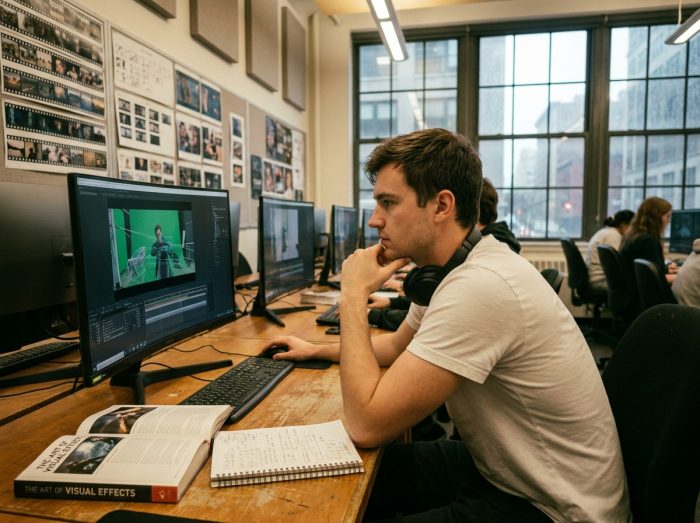
Generative AI and special effects: what is changing for newcomers
The arrival of generative artificial intelligence tools in VFX pipelines raises concrete questions for professionals at the start of their careers. Tasks previously assigned to juniors (rotoscoping, shot clean-up, basic texture generation) can now be partially automated.
The available data does not allow for conclusions about the exact extent of job losses related to these tools. Some studios present them as productivity accelerators, while others see them as a threat to entry-level positions. AI does not replace artistic direction, but it compresses intermediate technical steps.
For a film lover entering the industry, the question arises differently: the narrative skills and visual culture gained from a passion for film become harder to automate than pure technical gestures. Understanding why a shot works emotionally, knowing how to read a scene, anticipating the audience’s gaze on screen—these abilities remain beyond the reach of current algorithms.
- Artistic supervision and VFX direction positions are more resistant to automation than technical execution roles
- In-depth knowledge of film history and visual movements helps formulate creative briefs that AI alone cannot produce
- Studios adopting AI seek operators capable of judging the quality of the result, not just initiating a process
The special effects sector remains a field where film culture makes a difference as technology becomes more accessible. Tools change, software evolves, but the ability to tell a story through images remains the most enduring entry filter in this industry.