
An insufficient maintenance limits the blooming of wisteria, but too severe pruning compromises its structure. Some Japanese varieties poorly tolerate umbrella formation, unlike the more flexible Chinese cultivars. Metal supports encourage the spread of tendrils, but wood is still recommended to avoid burns on the stems in summer.
The success of an umbrella wisteria depends as much on the selection of the plant as on the timing of intervention. Irregular watering or excessively calcareous soil hinders growth, even with ideal exposure. Mistakes in training slow down the establishment of the desired shape during the first three years.
A Lively Shady Spot: Why Wisteria So Captivates Gardeners
The wisteria immediately establishes itself as a climbing plant with spectacular vigor, capable of transforming a pergola, a facade, or a simple wall into a true living tableau. Its scientific name, Wisteria, encompasses several major varieties: wisteria sinensis from China, wisteria floribunda from Japan, not to mention the elegant wisteria brachybotrys and the remarkable ‘Blue Moon’, valued for its hardiness against frost.
Once established, the wisteria unfolds each spring with a clustered bloom of subtle fragrance, sometimes followed by a second wave in summer. This explosion of flowers irresistibly attracts bees, bumblebees, and other pollinators, bringing a discreet yet constant animation to the garden. Its deciduous foliage offers dense and moving shade, sought after for creating natural refuges on the hottest days.
Creating an umbrella wisteria is shaping a space where shade does not just protect but becomes an aesthetic component in its own right. The twining stems wrap around the strongest supports, drawing over the years a living, solid, and refined parasol. Capable of reaching fifteen meters in height and ten meters in span, the wisteria asserts its presence while remaining docile under the hand of the attentive gardener. Frost-resistant down to -20°C, it adapts to most climates, provided the soil remains well-drained.
Under its umbrella, light filters, fragrances linger, and colors evolve. Those who choose this plant for their garden are not just seeking shade: they summon the ephemeral, the quiet strength, the beauty that asserts itself effortlessly. To delve deeper into the art of creating an umbrella wisteria, draw inspiration from the dossier “Creating an Oasis of Shade with a Wisteria Parasol: Tips and Inspirations – Dédé in his Garden.”
What Are the Secrets to Successfully Growing an Umbrella Wisteria in Your Garden?
For the umbrella wisteria to reign supreme over your shady spot, a few rules structure its success. Start by choosing a solid support: metal pergola, sturdy trellis, arch, or posts made of hardwood. The twining stems become heavy as they mature and require a stable architecture. Favor a sunny exposure: blooming is more generous under direct light, away from cast shadows or prevailing winds.
The soil for wisteria must remain well-drained, deep, and fertile. Excess moisture or heavy soil promotes root rot. Enrich with compost or organic amendment before planting. In the first year, a regular watering is essential until rooting; afterward, the plant can do without frequent attention, except during pronounced drought.
Pruning structures vigor. Prune twice a year: just after flowering to channel growth, then at the end of winter to encourage flowering branching and limit encroachment. Wear gloves, as the toxicity of wisteria is not a myth. Inspect leaves and stems: aphids, scale insects, powdery mildew, or chlorosis may appear, especially on weakened plants or poorly drained soils.
An organic mulch retains moisture and limits competition from weeds. Add a potassium-rich fertilizer in spring to support blooming. Maintain distances from walls and pipes: an adult wisteria develops powerful roots and can become invasive.
Creative Ideas and Practical Tips for a Flowering Space That Invites Relaxation
Structuring the space around an umbrella wisteria requires going beyond mere spectacular blooming. The most experienced gardeners often pair wisteria with companion plants to enrich the plant palette and extend the interest of the area. The climbing rose and clematis, for example, share the same preference for light and sturdy supports. Their blooming intertwines, offering a renewed spectacle throughout the seasons.
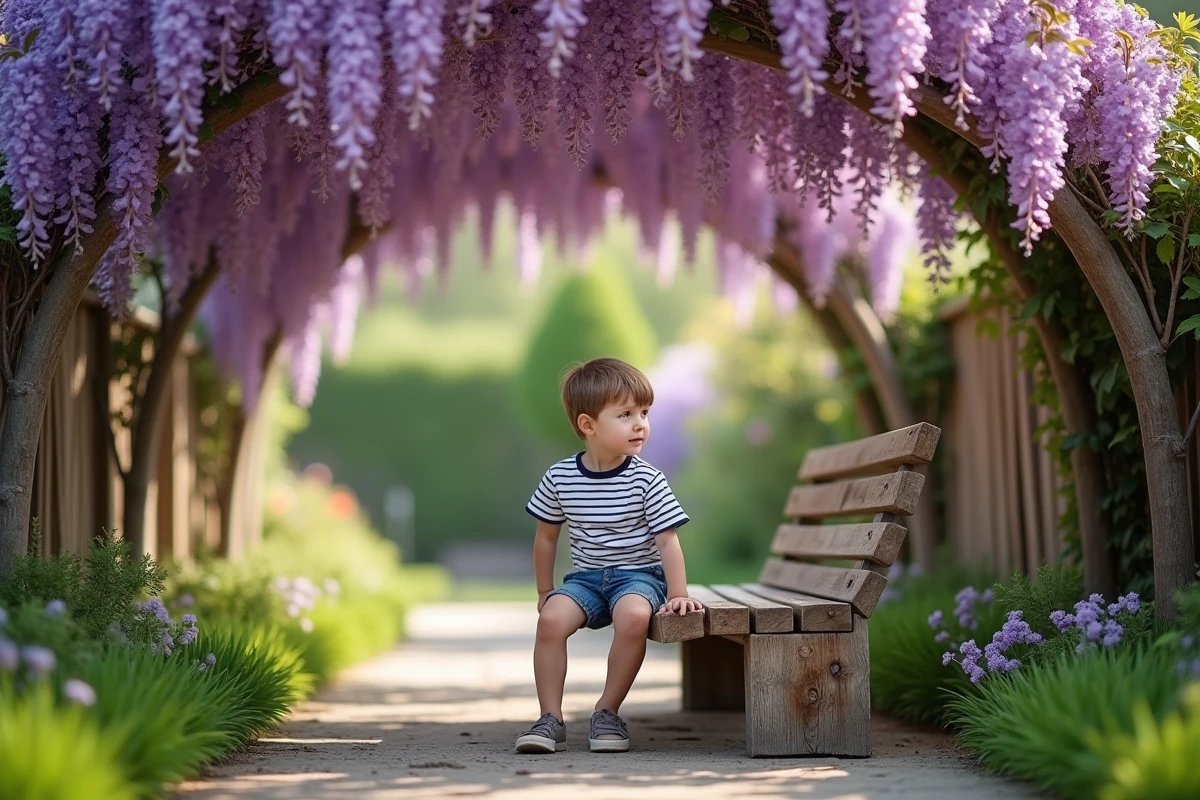
Set up a bench or some seating under the canopy to enjoy, in the late afternoon, the dense shade and subtle fragrance of the flowers. Let the clusters fall freely: they filter the light, casting moving shadows on the terrace or lawn, creating an ambiance conducive to contemplation.
For those who wish to vary textures and colors, compose around the wisteria a perennial bed: ferns, hostas, and heucheras thrive well in partial shade and enhance the freshness of the area. A thick mulch made of bark or compost retains moisture and limits competition from weeds.
- Encourage harmonious plant associations to diversify blooming.
- Plan regular maintenance of supports and clear pruning to maintain the airy structure.
- Play with height: hang lanterns or pots to enhance verticality and the secret garden spirit.
The umbrella wisteria thus becomes more than just a shelter; it is a living haven for pollinators and a welcoming place for relaxation, away from the hustle and bustle. Nothing rivals the freshness of a moving shade, woven from purple clusters and filtered light, when the garden becomes a refuge and an open stage for contemplation.