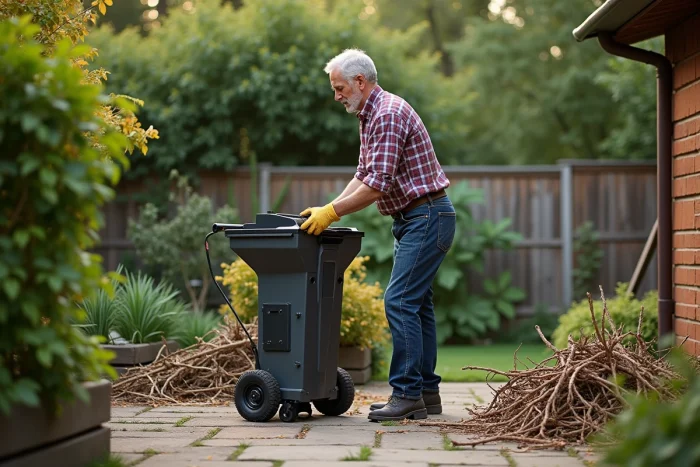
A shredder that is too powerful for occasional use risks damaging tender branches and unnecessarily increasing energy consumption. Some thermal models, known for their robustness, turn out to be less efficient on small volumes than well-suited electric models. Helical blades, often praised for their performance, require frequent maintenance or they quickly lose their effectiveness.
The compatibility with the waste to be processed varies greatly depending on the chosen technology. The capacity of the collection bin and the noise level are among the criteria often overlooked, yet they directly influence the user experience and long-term satisfaction.
Garden shredder: what challenges for your garden this year?
The garden shredder now holds a prominent place in sustainable garden management. Transforming green waste into mulch or wood chip (BRF) is no longer a secondary option: regulations limit burning, and making multiple trips to the waste disposal site costs time, money, and ultimately discourages many gardeners. Recycling branches, trimmings, and foliage on-site not only reduces the amount of waste but also creates a valuable resource for soil structure or mulching.
Thanks to the shredder, the volume of green waste becomes much more manageable, and garden maintenance is facilitated. Used in compost or as mulch, the shredded material retains moisture, slows the proliferation of weeds, and enriches the soil. Experienced gardeners know: every trimming, every cut branch becomes a new resource. It’s a virtuous circle that leads to waste reduction and increasing autonomy. The choice of shredder is not trivial: it determines the ability to effectively process waste according to the nature of the plants, the size of the land, and the frequency of work.
The regulatory framework for the use of shredders is strengthening, particularly regarding noise and environmental compliance. It is recommended to examine both the technical aspects and the conformity of the selected equipment. For those wishing to delve deeper, detailed analyses and serious comparisons are available at https://www.broyeur-vegetaux.net/, Best Garden Shredder: Comparison 2026, Tests and Reviews. This overview sheds light on the most suitable solutions for current realities, prioritizing reasoned maintenance and the valorization of garden resources.
Electric or thermal, which type of shredder meets your needs?
The choice is clear: electric shredder or thermal, which solution effectively values green waste and manages garden volumes? The power source, whether electric or gasoline, structures usage, performance, and adaptation to your land’s configuration.
The electric shredder is primarily aimed at small to medium-sized gardens. Its lightness and maneuverability are appealing: just plug it in to effortlessly transform shrub, hedge, or small branch trimmings up to 35-40 mm. Its limited noise level is particularly valuable, especially in residential areas or during extended sessions. It’s the practical choice for those who want a compact, easy-to-maintain, and discreet device.
On large areas or for heavy use, the thermal shredder takes the advantage. Powered by a gasoline engine, it effortlessly consumes thick branches, sometimes up to 75 mm, and completely frees itself from electrical extensions. Its mobility on vast terrains, robustness, and processing capacity make it the tool of choice for professionals and owners of large gardens. However, its noise level is higher, and its maintenance requires more attention.
To go further, shredders rely on three distinct technologies. Here’s an overview of these systems:
- Blade disc: ideal for soft waste and small branches.
- Rotor: a versatile solution, comfortable with both hard branches and soft wood.
- Turbine: designed for large volumes and thick branches without risking jams.
Before making your decision, take the time to analyze your needs: frequency of use, nature of the plants, maximum diameter to shred, and desired autonomy. A model suited to your land and habits will make all the difference over several seasons.

The essential criteria for choosing and using your garden shredder
Power, cutting diameter, and volume to process
The nature of the plants in your garden determines the power and cutting diameter to look for. A model exceeding 2500 W shreds thick branches effortlessly; below that, it is limited to finer trimmings and foliage. When the garden generates a lot of waste, it’s better to invest in a robust device with an appropriate shredding system: blade disc for soft waste, rotor or turbine for hard branches and larger volumes.
Here are the main elements to consider for properly sizing your choice:
- Garden area: a large plot requires greater processing capacity.
- Frequency of use: whether trimming occasionally or regularly, the need will differ.
Mobility, noise, and safety
The mobility of a shredder directly influences its ease of use: prefer wide wheels, an ergonomic handle, and a moderate weight to facilitate transport, even on uneven terrain. The noise level deserves full attention: limiting disturbances for neighbors, respecting regulations, also preserves neighborhood friendliness. During use, do not overlook safety equipment: glasses, ear protection, gloves, safety shoes, and appropriate clothing provide effective protection. A well-designed model always includes safety features to prevent any risk, even during prolonged use.
Maintenance and additional features
Regular maintenance, cleaning, sharpening of blades, and checking safety features ensure the longevity of your shredder. Some models stand out by having a collection bin or an ejection chute, which simplifies the collection and use of shredded material for mulching or composting. The price often reflects quality, power, and options, but the best decision remains one that aligns with your actual needs and a reasoned management of your garden.
Ultimately, choosing a suitable shredder opens the door to a more autonomous, less burdensome garden that is resolutely forward-looking. With each cut, the garden gains vitality; with each season, your practice refines, and the horizon expands.